Practical Herbalism – Mentored Online Course
Instructor: Cat Lane, Dip.CFN Chartered Herbalist
Overview
Why this course, and why now? There is a veritable avalanche of information today, online and in books, on the subject of “natural health” for animals. Some of this is a good thing, as working with herbs and diet can have a ripple-effect, not only healing the individual animal of any species, but bringing the one doing the healing work closer to a truly holistic view of the world. I’ve talked about this in my article “Healing Animals Heals Us and the Earth” – my deep belief in the Interconnectedness of all life, and how something as deceptively simple and small as changing your dog’s diet can bring much more healing to the world around us than we might ever dream. When I began this journey, there were only a few nutrition books for dogs and cats and none that I know of outside of Juliette de baraclai Levy, that focused on the unique needs of other species. Today, we still don’t have a lot of “animal herbals” but we have countless books on nutrition, countless sites – opinions – and the whole “natural health for dogs” has become a huge, multi-million dollar business.
I am pleased to offer a unique course, focused on dogs, on herbs and on common canine conditions you as a home herbalist will almost certainly encounter.
what you will learn
Most critically, you will learn to think of about herbal actions, and energetics, and not just what condition it can be used for. Because we are going to learn about conditions system-by-system, you’ll come away with a much more sophisticated understanding of herbs than just “this-for-that” style (superficial) usage. Plant medicine is so much more than thinking of a herb as a natural, less toxic alternative to a drug. The art takes many years to master, but it goes much more easily if you know how to approach it. In other words – this course will not just teach you an amazing amount about the herbs we’re covering and the conditions everyone wants to know about – it teaches you how to go on learning
Course Breakdown
1
Build a Home Herbal Apothecary Geared Towards Your Dog’s Unique Needs
Build a home apothecary geared to the unique needs of your own dogs, filled with herbs you use most frequently, herbs that grow close by or that you grow yourself, and preparations you have made on your own
2
Select Herbs to Address a Wide Range of Common Canine Health Conditions
Select, prepare and dose herbs to address a wide range of canine health concerns, from hot spots and split pads to colitis, urinary tract infections and anxiety
3
Select & Use Herbs Daily Tailored to Your Dog’s Unique Needs and Constitution.
Select and use herbs on a daily basis for their tonic benefits, health-supportive properties – and best suited to your individual dog’s unique needs and constitution
4
Make Your Own Tinctures, Glycerites, Salves, Infusions, Decoctions & More
Make your own tinctures, glycerites, salves, infusions, decoctions, electuaries and “goo balls”, herbal honeys and vinegars, for use with your dogs (and yes, you can have some too)
5
Identify & Harvest Wild Plants That Are Safe and Effective Herbal Helpers.
Identify and harvest a number of wild plants that are safe and effective herbal helpers for use both internally and externally
6
Understand Basic “Filing System” of Herbalism. Support Future Herbalism Learning
Understand the basic “filing system” of herbalism – “chunk it down”, so to speak. Understand that herbalism moves beyond using a specific herb for a condition, like a replacement for a drug, but is grounded in really knowing the plants (actions, energetics, constituents, methods of preparation, safety) and the anatomy and physiology of the species you are working with. We will touch on the more academic aspects here, to make sure you are “thinking like a herbalist” and you will feel much less overwhelmed by the vastness of this area of study. In other words, this course will make future leaning much easier for you.
7
Develop Your Own Materia Medica of Useful Plants Based on Step Six
Select and use herbs on a daily basis for their tonic benefits, health-supportive properties – and best suited to your individual dog’s unique needs and constitution
8
Form a Solid Foundation in Herbal Studies- Preparing for Deeper Study & Knowledge
Make your own tinctures, glycerites, salves, infusions, decoctions, electuaries and “goo balls”, herbal honeys and vinegars, for use with your dogs (and yes, you can have some too)
course overview
Module One- Introduction to Herbalism
- How herbalism differs from the popular coverage – allopathic vs. holistic
- History of herbal medicine (Chinese, Ayurveda, Western)
Using plant medicine – conditions vs systems, “quick fix” vs longterm support - Actions – why you need to know them all…Actions describe what a herb does in the body (astringent, demulcent, alterative, cholagogue, nervine, stimulant etc ) and herbs have more than one action, so this is foundational knowledge. We’ll use the actions of a herb consistently throughout the course to help familiarize you with them all
- Constituents – an overview of the basic biochemistry of plants
- Energetics – a look at the spectrum of temperature (heat/neutral/cold) and moisture level /effect of herbs, and how these impact on our selection and formulation
- Constitution – what does the term really mean and how do we assess it?
- Special needs of the Dog – cautions and sensitivities
Module Two- Your Herbal Home Apothecary
- Getting set up – selecting and storing herbs
- Dry herbs – growing, ordering, storing
- Tinctures – alcohol, glycerites – what to purchase, when to use
- Jars and bottles, lids and labels,equipment for making and measuring
- The herbs from A – Z I use the most(and you will too)
- Other stuff you will need ( scales, funnels, gauze, infusers, sterilizing pans, and more)
Module Three- Preparation
Herbs can be prepared in a variety of ways, some methods are superior for extraction of some constituents, for example alkaloids tend to extract best in alcohol, mucilage extracts in water, and so on. Water preparations are often ideal, but your dog may not like the bitter taste of some herbs. This unit will cover basic methods of preparation, from cold infusions to electuaries (pills you can make by heating honey and stirring powdered herb into it, then rolling into balls).
- Water – Infusions and decoctions
- Alcohol and glycerin – Tinctures
- Sweet stuff – honey, electuaries, syrups
- Pills, powders and capsules
- What you will need – equipment list and resources
Module Four- The Skin
- Overview of the skin
- Nutrition and the skin
- Hot spots
- Fungal infections
- Atopy
- Yeast (Malessezia)
- Seborrhea
- Flea allergy
- Mange
- Abscesses
- Lick dermatitis
- Burns
- Bee and wasp stings, insect bites
- Canine acne
- Pyoderma: superficial, deep and skin-fold
Materia Medica for the Skin: Calendula (Calendula officinalis) Chamomile (Matricaria recutita ) Aloe Vera(Aloe spp), Rose (Rosa spp) Chickweed (Stellaria media) Plantain (Plantago major, lanceolata)
Module Five- The Digestive System
- Overview of the digestive system
- Nutrition and the digestive tract
- “Colitis” what the term means and encompasses
- Diarrhea – types and causes, how to treat, when to see the vet
- Conditions of the
- stomach – gastric ulcers, reflux, enteritis
- Herbs for the Liver and gallbladder
- Pancreatitis and EPI
- Constipation
- Food intolerance
Materia Medica for the digestive system: Slippery Elm (Ulnus rubra) Milk thistle (Silybum marianum) Burdock (Arctium lappa) Dandelion (Taraxacum officinale) Oregongrape root(Mahonia aquafolium) Turmeric(Curcuma longa) Marshmallow(Althea officinalis) Goldenseal (Hydrastis canadensis) Schisandra (Schisandra chinensis), Peppermint(Mentha x piperita) Fennel(Foeniculum vulgare) Cinnamon(Cinnamomum spp) Blackberry (Rubus fructicosus)
Module Six- The Nervous System
- Overview of the nervous system
- Nutrition and the nervous system
- Anxiety
- Depression, grief
- Phobias
- Canine Cognitive Dysfunction
- Pain – types of(chronic, acute, mild, severe)
Materia Medica for the Nervous System: Skullcap(Scutalleria lateriflora), California Poppy (Eschscholzia californica) Passionflower (Passiflora incarnata) , Wood Betony (Stachys officinalis) Crampbark (Viburnum opulus), Linden (Tilia cordata) Valerian (Valeriana officinalis), Milky Oats (Avena sativa) St. John’s wort(Hypericum perforatum) Rosemary (Rosmarinus officinalis) Ashwagandha (Withania somnifera) Lemon Balm (Melissa officinalis)
Module Seven- The Urinary System
- Overview of the urinary system
- Nutrition and the nervous system
- Urinary tract infection
- Urolithiasis – types of stones, varying strategies
- Chronic kidney disease
- Incontinence
Materia Medica for the Urinary System: Uva ursi (Arctostaphylus uva-ursi)) Echinacea(Echinacea spp) Agrimony(Agrimonia eupatoria), Couch grass (Agropyron repens), Cornsilk(Zea mays) Yarrow(Achillea millefoilum) Horestail(Equisetum arvense) Gravel Root(Eupatorium purpurea) Parsley (Petrosolineum spp
Module Eight- The Respiratory System
- Overview of the Respiratory System
- Nutrition and the Respiratory System
- Kennel Cough
- Acute rhinitis
- Sinusitis
- COPD (Chronic Obstructive Pulmonary Disease)
- Allergic pneumonitis
Materia Medica for the Respiratory System: Mullein (Verbascum Thapsus) Reishi (Ganoderma lucidum) Elecampane (Inula helenium) Thyme (Thymus vulgaris) Osha (Ligusticum porteri) Hyssop (Hyssopus officinalis) WildCherry bark (Prunus serotina) Licorice (Glycyrrhiza glabra) Evening primrose (Oenothera biennis) Sage (Salvia officinalis) Goldenrod (Solidago Canadensis) Angelica(Angelica archangelica)
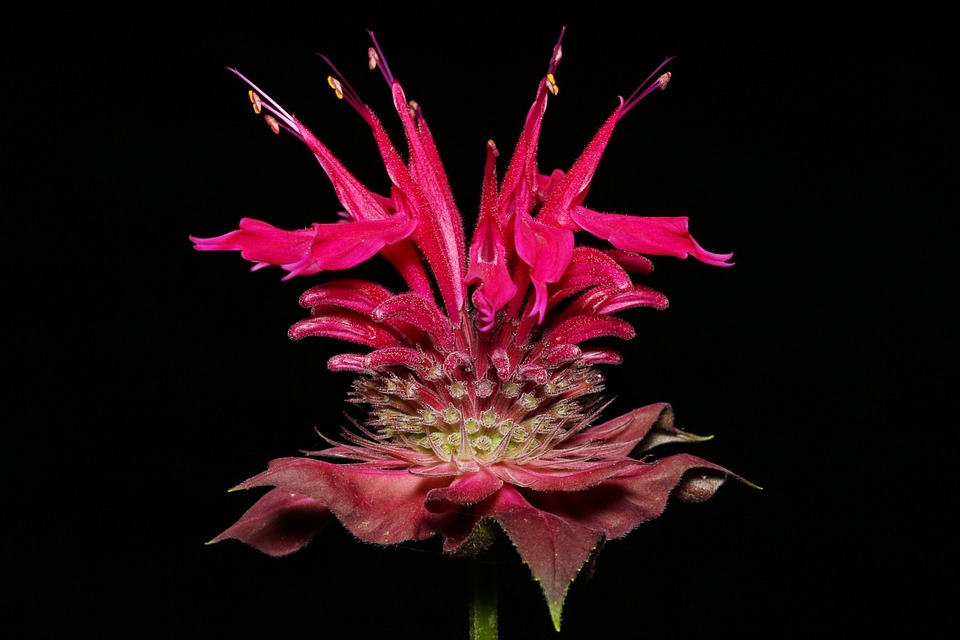
Monarda didyma, common name Bee Balm, underused in veterinary herbalism but a powerhouse of actions including relaxing nervine, anti-microbial, anti-fungal, carminative and anti-spasmodic – useful for a variety of digestive upset, for yeast infection, abscesses and other infections, for nervous highstrung dogs who run to a cold constitution or as part of various formulas for anxiety
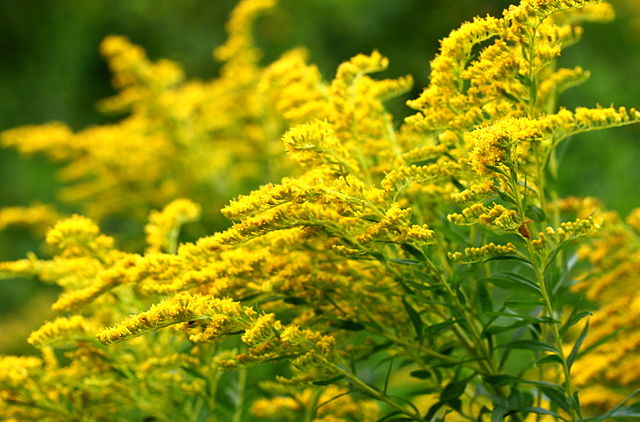
Goldenrod, Solidago spp…often misunderstood as a cause of hayfever when for most people it is simply blooming at the same time as the real culprit: Ragweed! Goldenrod is an amazing herb, again underused, but has applications for use both externally and internally. Goldenrod is astringent, anti-inflammatory,carminative, expectorant, antifungal and more – making it useful for rhinitis, diarrhea(astringency) for bladder infections,and topically it makes a lovely infused oil for sore muscles and sprains.
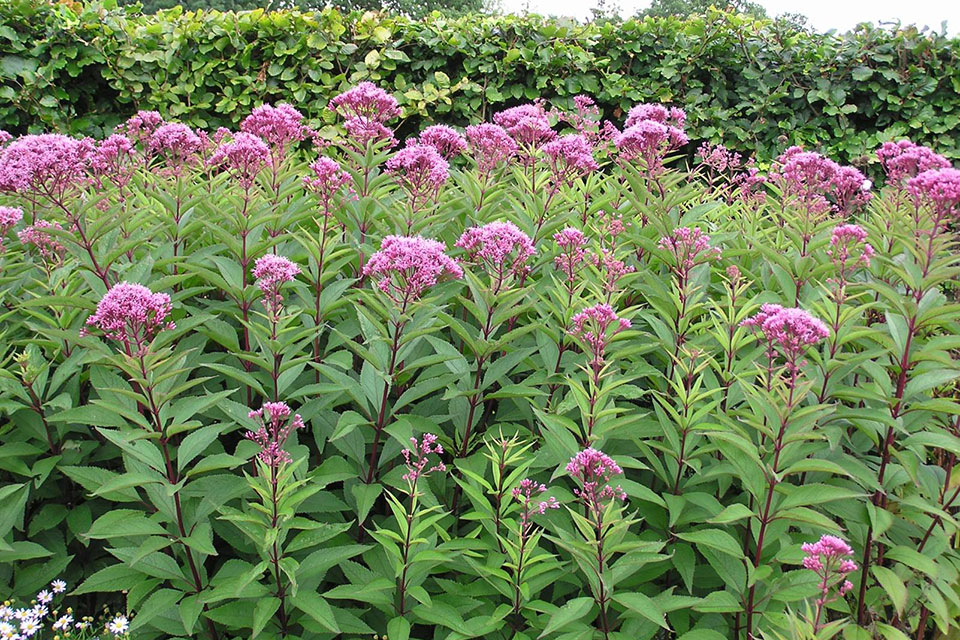
Gravel Root, Eupatorium purpurea, is a common sight along roadsides and near marshes in the summer months across much of North America. It’s an amazingly useful plant in cases of bladder and kidney stones, but should be used under the supervision of an experienced herbalist.
Practical Herbalism for Dogs – Online Homestudy Course
This online course will be open-ended, meaning you can take as long as you like to finish. However, if you want the certificate, you need to complete it within 12 months, or else contact me to make an arrangement. The course starts with covering some basic information on herbalism, describes how to stock up a home apothecary, and then goes straight into the conditions you, as home herbalist, are likely to face with your dogs.(Much, but not all of the information applies to cats – when in doubt, ask me!)
While this course aims to be comprehensive and cover not only common conditions, selection of herbs, preparation, dosing and potential interactions, it is also an Introductory programme and so we won’t be looking at some of the more severe diseases that a herbalist night be called to address. For example, the section on skin won’t touch on pemphigus, and the Immune system module will cover auto-immune disease, but not go into detail about working with conditions such as lupus or thrombocytopaenia. There will be a special module on cancer; unfortunately it touches almost every dog lover’s life at one time or another, so I feel it merits a special look. Important to remember too, that many conditions overlap; food intolerance starts with the immune system but affects both skin and digestion. In cases like this, I have placed the condition under the category of the system it originates in.
Each of these topics, from history of herbal medicine to actions and energetics, through each body system and on to cancer, deserves a whole course of study, and for the professional, a lifetime of adding to that study with cases, courses and keeping up with new findings as well as learning the old knowledge. For the home herbalist, I hope this course will provide you with a foundation for working more precisely and expansively.
1
Purchase the Course & Immediately Receive Access on the My Courses Page
2
Work Through the Course & Submit Homework Online
3
Ask Cat Lane Questions Along the Way and Have Open Ended Access to the Course